
Industrial Process
Valves for chemical, pharmaceutical, food, pulp and general process plant
Industrial process applications span a wide range of media, temperatures and pressures. This selection gathers ball, butterfly, globe, diaphragm and other process valves with the strainers and safety devices used across chemical, food, pharmaceutical and general plant. Material certification, hazardous-area approval and food-contact compliance are confirmed against the item at quotation.
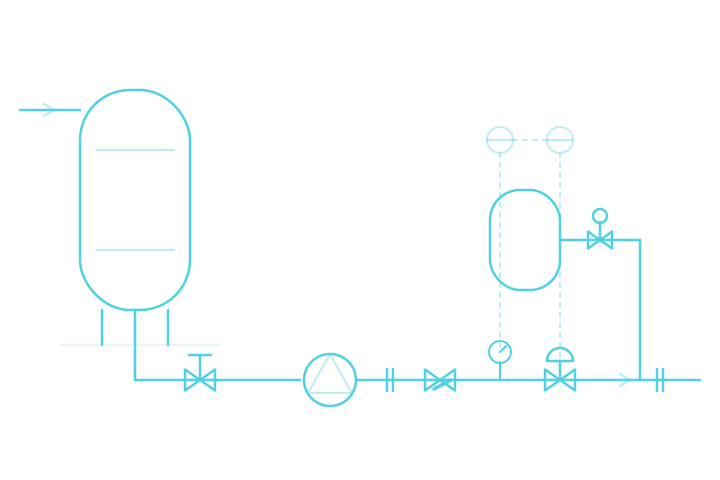
Selecting the right valve type for the duty
Ball valves provide reliable bubble-tight shutoff with quarter-turn operation, making them the default choice for isolation in clean process lines. They are compact, low-maintenance, and readily adapted for electric or pneumatic actuation. Full-bore designs maintain pipe cross-section and allow pigging where required. Reduced-bore designs are acceptable where pressure drop is not a constraint.
Butterfly valves offer a cost advantage at larger diameters (DN150 and above) with the same quarter-turn actuation. High-performance double-offset and triple-offset butterfly valves extend the application envelope into higher pressures, higher temperatures, and tighter shutoff requirements compared to concentric-disc designs.
Globe valves provide accurate flow control over a wide turndown ratio, making them the standard selection for modulating control valve duty. Their inherent flow restriction (high Cv compared to on-off valves) should be accounted for in pressure drop calculations.
Difficult media: slurries, corrosives and viscous fluids
Slurries and solid-laden fluids will damage conventional ball or butterfly seating over time. Knife gate valves with elastomer sleeves provide effective isolation in pulp, slurry, and wastewater sludge lines. Pinch valves, where the flow passage is a flexible sleeve pinched by an external mechanism, eliminate all internal metal-to-fluid contact and are standard in highly abrasive or corrosive media.
Diaphragm valves use a flexible membrane to isolate the actuator and valve body from the process fluid entirely. They are the standard choice in pharmaceutical, food and beverage, and ultra-pure water applications where no wetted metallic parts, dead legs or crevices are permissible.
Pressure and safety
Pressure reducing valves (PRVs) protect downstream equipment from upstream pressure excursions: a PRV continuously adjusts its opening to maintain a constant downstream set pressure regardless of flow demand or upstream variation. Safety relief valves (SRVs) are the last line of overpressure protection: they are normally closed and open only when process pressure reaches the set point, venting to atmosphere or a relief header. Both are required by the Pressure Equipment Directive (PED 2014/68/EU) in systems above certain volume and pressure thresholds.
Applicable standards
- Built to the applicable EN standards for the valve type. The exact standard, class and certification are confirmed against the item at quotation.
Typical pressure range: PN16 to PN40 for most process duties; PN63 and above for high-pressure service